

Civ VII Post-mortem: Crafting a redemption arc
 NoSoup4U
(36 ratings)
Sep 22, 2025 @ 2:34pm99812
Story or LoreWalkthroughsEnglish
Intro

In the six months since Civ VII’s release, Firaxis has issued five patches, and each time the concurrent player count and Steam rating has declined further. This is because, with a few notable exceptions, Firaxis isn't focusing on the most impactful issues. Unfortunately, the most critical flaws are not always the most visible, which has complicated recovery efforts.
The purpose of this post-mortem is to:
- Provide Firaxis and the community with better tools and concepts for discussing, evaluating, and prioritizing Civ VII’s issues
- Identify and define the "core values" of 4X games and the Civilization series
- Shine a spotlight on the issues that are “hardest to see and talk about”
Author's Note
This guide is an abridged version of a discussion on civfanatics (link[forums.civfanatics.com]).Who am I?
I am a Chief Product Officer for Enterprise SAAS software, with over 25 years of software product management experience. I’ve also played Civilization since Civ I. My specialty is teasing apart complex product problems, creating a mental model to understand them, and prioritizing what issues to address first.Civ VII play time: >1100 hours.
The Problem
A fundamental problem with Civ VII is that game replayability needs more depth. This isn’t my opinion; it was stated by Firaxis in the June 10th check-in (link[civilization.2k.com]), alongside abrupt Age transitions and Empire identity.
Age transitions and Empire Identity are very specific and implied Firaxis already had some approaches in mind (and has, in fact, made progress since). In contrast, “game replayability” is extremely broad, and no examples are provided. There’s a sense that Firaxis too is struggling with how to “eat the elephant".
That’s one of the reasons I wrote this, to help split the problem into bite-size chunks. There are steps you can take to break a problem down. The first is to revise the problem statement above because it’s incomplete. A good problem statement doesn’t just state the problem – it also lays out the ideal state that is being deviated from.
But in order to articulate that ideal, what’s needed is a better, deeper definition of what makes 4X games and specifically the Civilization series so engaging – an updated mental model around the psychology of player motivation in 4X games.
With that mental model in place, we can use the emotional drivers to evaluate Civ VII’s design principles, gameplay systems, and mechanics with an eye to how they will be impacted in pursuit of the redemption arc. Some principles will remain untouched, others will need tweaking, and a final set will need to fall by the wayside or be tabled until they can be more fully developed and play tested in an expansion.
You've lost that Civving feeling...
This document covers many of Civ VII’s gameplay mechanics and systems, but if we were to focus solely on those, we’d be treating the symptoms and not the disease. That’s why our first focus is on identifying the emotional drivers behind Civilization’s sirens’ call to play "just one more turn".Once we've got those emotional drivers identified, then we can start to work backwards and look at what mechanics impact each of those drivers and what changed in Civ VII.
A problem well named is a problem half solved
One of the biggest difficulties in getting a handle on Civ VII’s issues is that there simply isn't the vocabulary needed to properly discuss those issues. Without clear names for these problems, people are unhappy but can't articulate why. So they fall back to issues they can easily see and name, which may not be the most important problems to address.
Clearly naming the problem enables deeper understanding and more effective action. The name directs attention, resources, and solution strategies.
Fortunately, Herson's video on Player Interaction provides a roadmap for bringing those nebulous problems into focus. Herson took a number of seemingly disparate items, found the common thread running through them, identified the issue, characterized the problem space and its boundaries, and most importantly established the term.
If we’re going to help fix Civ VII, we need that same rigor applied to several other problem areas: the over-balancing, the over-streamlining, and the over-simplification.
I’d argue this definition section is the most important section in this document, because even if you don’t agree with the guide's conclusions, you’ll come away with an expanded set of terms and concepts you can use in making your own. My goal isn't to convince you of my views on Civ VII; it's to enable you to more clearly articulate your own viewpoint.
The 4X Core
What is a 4X game?
This sounds like a question that answers itself – Explore, Expand, Exploit, Exterminate.
But assuming you check all four boxes, what would cause a game to fall out of the 4X category?
- If you add metaprogression (as an example), does that suddenly remove the game from the 4X category?
- If the game is not historically accurate, is it not 4X? Obviously not, or how else could Australians invent the wheel?
- If a game has RPG elements, is it no longer 4X? That excludes Age of Wonders.
Fortunately, over time an unspoken consensus around the core identity of 4X games has emerged, allowing us to turn these unspoken ideals into a more concrete definition – the “Core values of a 4X” (aka the "4X Core").
This is important, because as long as enough of a game’s 4X Core is intact, players will tolerate a fair amount of innovation and change (up to a point). The 4X Core definition should help greatly in evaluating Civ VII.
So what are the 4X Core Values?
Before establishing the definition of the 4X Core and the characteristics that define it, some ground rules must be set:
- Characteristics should describe the motivations driving people to play 4X games, the resulting emotional needs being met, and feelings of success and fulfillment that keep the players coming back and playing again and again. Specific mechanics do not fit this requirement; the emotions they create do
- Characteristics ideally surface unspoken beliefs about what a 4X game is
- Characteristics must be universal and held by most (if not all) players
With those ground rules in mind, here’s a stalking horse definition:
- “From stone age to space age”: a more general version would be “From humble beginnings to greatness” Time period and scale are immaterial. It can be from single-cell organism to universe (Spore) and there can be multiple types of greatness (military, scientific, cultural) but the main idea remains the same.
- Sandbox: There are many paths to winning; you choose your path and milestones. While technically Sandbox doesn't imply an end goal or win state, both are assumed to exist, though you don't necessarily need to pursue them.
- Control: Your decisions are the primary driver of your fate. Setbacks, when they occur, could have been prevented had you chosen a different course of action (with a few specific exceptions, such as natural disasters).
- Power: It’s important to feel powerful (but not all-powerful). You have meaningful unique advantages that are both key to your identity and are also the starting point for the playstyle and strategy for that play through.
- Adversity: When you look back at your “best” games, the ones burned into your memory are where you overcame significant obstacles. That could be a bad start location or an enemy holding a key resource that gives them a significant advantage. The games where you cruised to victory? They don’t even make the top 20.
- Scarcity: Drives desire, action, competition, and drama.
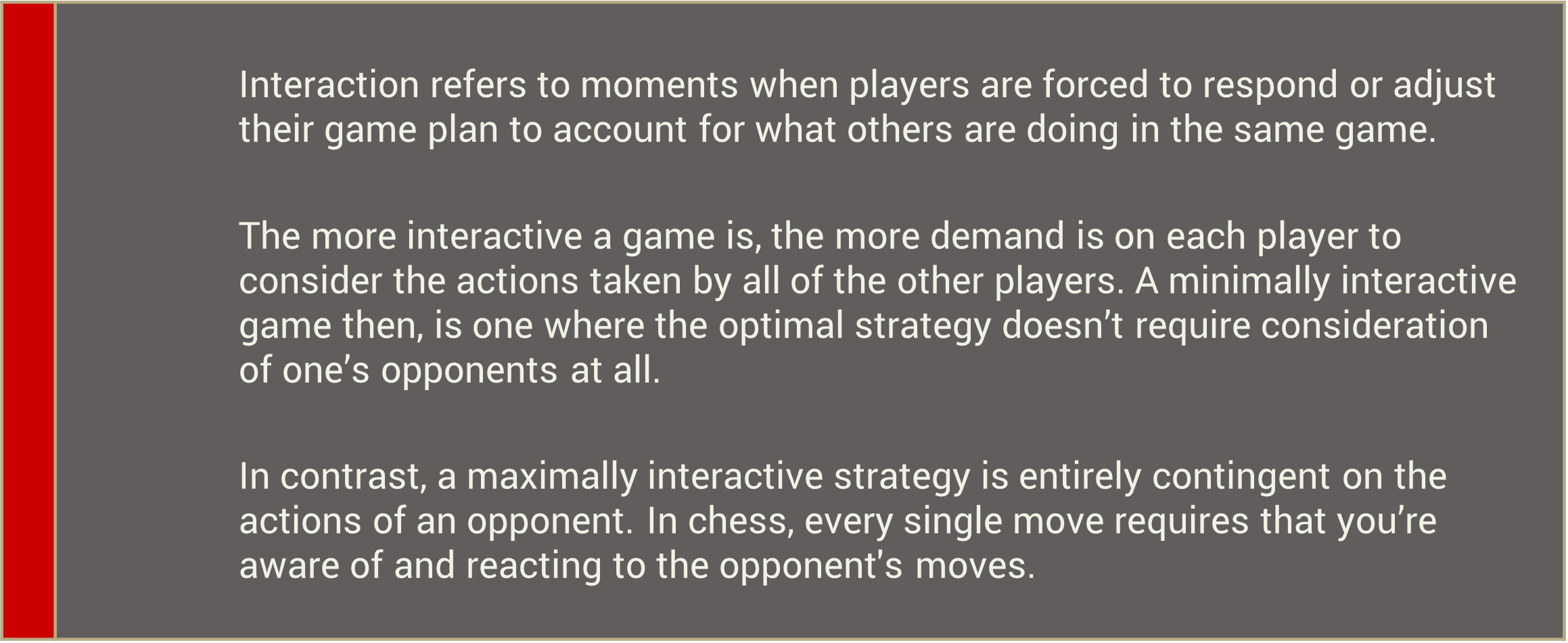
- Player interaction: Herson’s video nails the concept on the first try:
The Civilization Core
In addition to the standard 4X characteristics, Civilization has several unique hallmarks as well as unique jankiness. Interestingly enough, some of the jankiness is just as important to Civilization's identity as the unique features are:
- Stands the Test of Time: Civ is at its heart a power fantasy about creating an empire that would "stand the test of time," something rich and eternal that remains standing when everything else around you crumbles. You can prevent Rome from falling, you can prevent the Egyptians from being conquered, you can make Carthage prevail, you can make all of them stand the Test of Time.
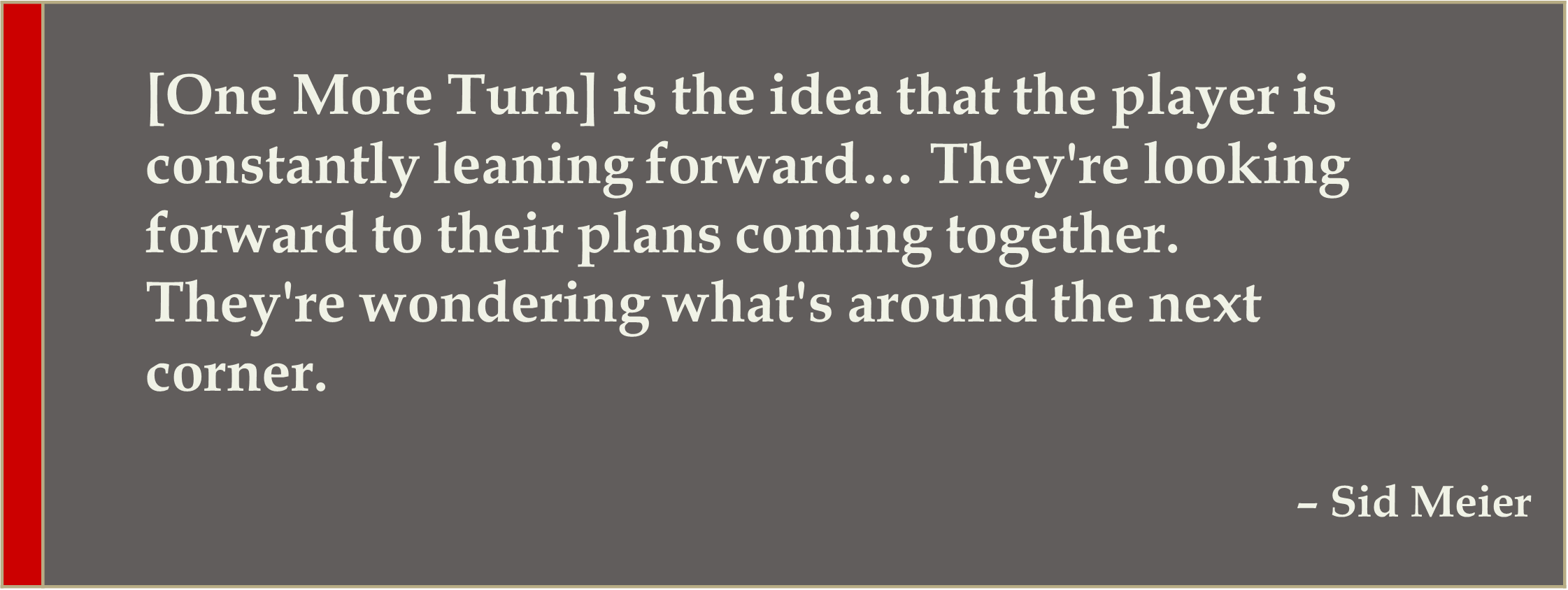
- One More Turn: “Just one more turn…” is synonymous with the Civilization series. If you look at One More Turn as describing a driver, it’s a feeling of anticipation for what comes next that is so strong that it becomes a sirens’ call.
- An hour to learn, a lifetime to master: Most of Civilization’s systems aren’t very complex in and of themselves. But the interaction between them creates a rich tapestry of possibilities and replay value.
- World Wonders: Awe-inspiring. Game changing with an impact that reaches across your civilization. Wonders are expensive and you’ll need to choose carefully and accept that you'll miss out on some good ones. That trade-off is yet another reason why the Wonders you build feel like such an accomplishment and also a major driver for replayability.
- Exploits are not a bug but a feature: In a game with many moving parts, some things will be overpowered (OP), and that’s ok. Finding and using them makes you, the player, feel smart and powerful. In fact, OP is a major source of replayability - trying different combinations of leaders and OP mechanics is fun.
- History-adjacent, not accurate: Australia didn’t invent the wheel, so suspension of disbelief is necessary, though where possible it’s good to maintain “truthiness”.
- Immersion: I am the leader of my civilization, the star of the show. This is not the Wizard of Oz ("Pay no attention to the man behind the keyboard!") The other leaders negotiate with me, sitting across the table, staring into my Core, locked in a battle of wills.
- Gandhi has nukes: no explanation needed.
On to the Main Event
Now that we have more clearly defined what makes 4X games and the Civilization series so addictive, we can use those characteristics to evaluate Civ VII.
There are literally dozens of areas (see the Appendix) that we could explore, and doing so would turn this document into a novel. Since your time is valuable, I took a lesson from cooking shows. I explored many of Civ VII’s issues in depth and placed those detailed ingredients in the Deep Dives appendix (link). Then I pulled the Problem Statement and supporting evidence out of the oven fully baked and ready for you to devour.
Bon appetit!
Civ VII's Primary Problem, redefined
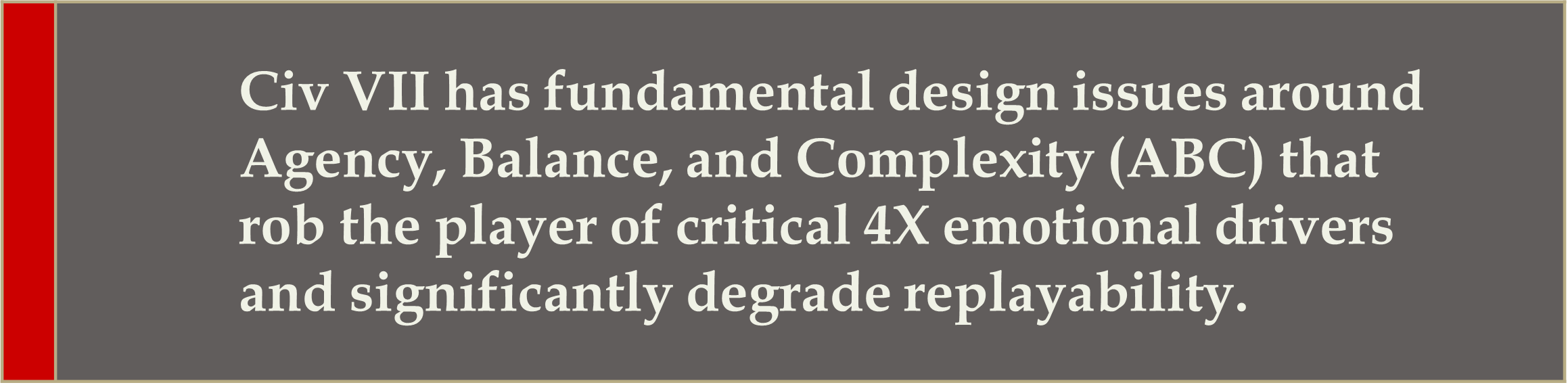
I am going to put forth a Problem Statement that many will find controversial, mainly because of what it doesn’t include, namely the UI, Ages, and Civ-switching. Even if those were done wonderfully, Civ VII would still not provide the replayability needed. There are more fundamental issues at play.
 .
.
Just to be clear, I’m not saying that the UI, Ages, and Civ-switching don’t need work. They need a great deal of improvement. But working on them before the ABC issues would be addressing the symptoms and not the disease.
Again though, my aim isn’t to convince you of my viewpoint. My goal is to equip you with more tools that you can use to articulate your own viewpoint.
As such, in the following sections I will walk you through how I used the 4X and Civ Core definitions to evaluate Civ VII. Then you can do the same, and perhaps create more tools we can all use in our discussions.
Just to be clear, I’m not saying that the UI, Ages, and Civ-switching don’t need work. They need a great deal of improvement. But working on them before the ABC issues would be addressing the symptoms and not the disease.
Again though, my aim isn’t to convince you of my viewpoint. My goal is to equip you with more tools that you can use to articulate your own viewpoint.
As such, in the following sections I will walk you through how I used the 4X and Civ Core definitions to evaluate Civ VII. Then you can do the same, and perhaps create more tools we can all use in our discussions.
The ABCs of 4X
There are three key concepts that make the Civilization series special:
- Agency makes the player feel clever and creates fun within turns
- Balance makes the player feel powerful and creates fun across turns
- Complexity makes the player feel engaged and creates fun across games
Agency
Agency is the capacity to take impactful actions to blaze your own path to become the preeminent civilization (i.e., win the game).
The several key components to Agency:
 .
.
Additionally, Legacy Paths destroy any sense of wonder or mystery about what comes next by laying out the entire plan in full. Even worse, the follow-on milestones are simply “do more of the same.” There’s no sense of progress and growth, no sirens’ call to keep playing.
Legacy Paths lead to No More Turns.
Robbing the players of their accomplishments and forcing them to re-earn them is humiliating and demoralizing. I’m not going to spend any time on this here because it’s common sense. A more thorough investigation can be found in the Flawed Design Principles section (link).
 .
.
(Note: This post-mortem covers Civ VII's release and the following six months (through patch 1.2.4). Changes in later patches are not reflected.)
If Firaxis doesn’t see the error of its ways, the road to redemption will be very rocky indeed.
The several key components to Agency:
- Capacity: both the existence and amount of power you can exert. Capacity implies constancy - you wouldn’t expect a one-liter bottle to degrade to 0.75 liters when you start a triathlon or suddenly drop to 0.4 liters after you switched from swimming to cycling.
- Impactful actions: actions that are both perceptible and “move the needle” towards your goals. If your actions aren’t impactful, they are busywork.
- Blaze your own path: there are many ways to reach one of the win conditions. You determine the milestones and your goals and choices drive your progress.
- Win: The game is not “Civilization Simulator”. A game without goals can’t even be called a 4X game. You don’t need to finish the game, but there should be one or more types of goals to shoot for (e.g., economic, military, and/or cultural), not just an arbitrary score victory.
Civilization VII’s assault on Agency
Civ VII’s design undermines player agency and significantly degrades player enjoyment. In particular, it:- Limits short-term decisions through reductive district placement rules and terrain homogenization
- Takes most medium- and long-term decisions out of the players’ hands by dictating arbitrary strategies and milestones for win conditions (i.e., Legacy paths)
- Places arbitrary, reductive caps via the Trading range and Settlement limit ([ANCHOR='-agency-case-study-arbitrary-trading-range-limits']link[/anchor])
- On Age reset, destroys your momentum, sabotages what you’ve built, cripples your capacity for action, and forces you to re-earn what you’ve already accomplished
Legacy Paths: the One More Turn Killer
Legacy Paths sabotage both the anticipation and the mystery necessary for One More Turn. By dictating the milestones, Legacy Paths take away the player’s ownership of a strategic plan, decimating any investment the player has in seeing how the plan might turn out..Additionally, Legacy Paths destroy any sense of wonder or mystery about what comes next by laying out the entire plan in full. Even worse, the follow-on milestones are simply “do more of the same.” There’s no sense of progress and growth, no sirens’ call to keep playing.
Legacy Paths lead to No More Turns.
Robbing the players of their accomplishments and forcing them to re-earn them is humiliating and demoralizing. I’m not going to spend any time on this here because it’s common sense. A more thorough investigation can be found in the Flawed Design Principles section (link).
.Real power in Civ VII comes from Attributes and Policies, not Player actions
The final nail in Agency’s coffin becomes extremely obvious if you use the “Policy Yield Previews” mod. As the game progresses, adding a policy or Attribute point outshines any other action you can take. In terms of impact, chaining Celebrations and doing tech/civic projects accelerates your civilization’s progress much faster, regelating other actions to being window dressing.(Note: This post-mortem covers Civ VII's release and the following six months (through patch 1.2.4). Changes in later patches are not reflected.)
Conclusion: Agency
Firaxis’ approach of dictating the “right way to play” demonstrates that they have lost the thread regarding the motivations behind player engagement and have lost the understanding of what makes 4X games and the Civilization series special.If Firaxis doesn’t see the error of its ways, the road to redemption will be very rocky indeed.
Balance
Civilization’s approach to Balance is what’s responsible for Civilization’s famous “One more turn” reputation (i.e., fun across turns)
 ,
,
Although the Civilization series does support multi-player, it has never been at the expense of the single-player experience. Although the Civilization series technically has AI “players”, the focus has always been on improving the AI versus rather than changing the impact of technologies, Wonders, and buildings.
In the Civilization series, game play features are not directly balanced against each other; abilities may be overpowered but are counterable, limited in lifespan, or offset by opportunity cost. This approach results in richer, more unique game play as abilities are not constrained to those which can be expressed via simplistic metrics.
However, the whole concept of Balance seems woefully inadequate in expressing the genius of the Civilization series and how magical it feels to play. How did Firaxis make that magic? How was Firaxis’ mindset different from others’?
 .
.
iBalance has a very different purpose:
If you take this one step further, iBalance is also a key component of replayability:
A major weakness to symmetric balancing is that it forces almost all abilities to be expressed in terms of the variables that are used for balancing. It heavily limits uniqueness and flexibility in design by ruling out anything that can’t fit into a cookie-cutter mold. Even worse, it works like blinders on a horse; over time designers forget that there’s a world of possibility outside of that artificially-constrained subset.
This leads to a major downgrade in Civ VII: formerly unique features (World Wonders, Great people, and even Leaders) that in prior versions boasted truly unique benefits have been homogenized so that their benefits all decompose into standard parameterized game mechanics instead of custom code. While this makes development, testing, and tuning easier, it leads to a cookie-cutter feel to the leaders, civilizations, and game mechanics.
For a more detailed discussion, see the section on Spreadsheet-driven design (link).
Balancing games: An esports design concept
Balance is a concept primarily used in multiplayer games, particularly competitive esports. Game play balance is symmetric - features are balanced against each other around one or more quantifiable metrics, such as DPS. Balance is primarily accomplished through nerfs and buffs, and is well-suited to games with an emphasis on real-time mechanics.Although the Civilization series does support multi-player, it has never been at the expense of the single-player experience. Although the Civilization series technically has AI “players”, the focus has always been on improving the AI versus rather than changing the impact of technologies, Wonders, and buildings.
In the Civilization series, game play features are not directly balanced against each other; abilities may be overpowered but are counterable, limited in lifespan, or offset by opportunity cost. This approach results in richer, more unique game play as abilities are not constrained to those which can be expressed via simplistic metrics.
However, the whole concept of Balance seems woefully inadequate in expressing the genius of the Civilization series and how magical it feels to play. How did Firaxis make that magic? How was Firaxis’ mindset different from others’?
How did Firaxis approach Balance in prior versions of Civilization?
Why did Civilization feel so special? To tease out an answer, it helps to step back and question basic assumptions:- Did Firaxis think about Balancing the same way others do?
- What if Civilization's version of Balance isn’t focused on human players versus AI opponents at all?
- What if it focused instead around being the “Secret Sauce” powering Civilization’s One More Turn magic?
Firaxis’ secret sauce: Imbalance
I’ll call Firaxis’ mindset “iBalance” to differentiate it from the traditional Balance approach.iBalance has a very different purpose:
- Provide unique leader and civ abilities, technologies, buildings, and Wonders that are fun, moderately overpowered, and always anticipated
- Create enough of those that the next one always lands at least every 5-10 turns
If you take this one step further, iBalance is also a key component of replayability:
- Provides multiple ways those items interact and can be combined to support multiple strategies and playstyles
- Provides enough variety that it would take hundreds of play throughs to try out the different combinations
Civilization VII’s shift to symmetric balance
Civ VII appears to have moved to a symmetric balance approach: Instead of celebrating diversity, the developers have ruthlessly removed (Torres del Paine) or nerfed (Imago Mundi, Gate of All Nations) uniqueness out of the game.A major weakness to symmetric balancing is that it forces almost all abilities to be expressed in terms of the variables that are used for balancing. It heavily limits uniqueness and flexibility in design by ruling out anything that can’t fit into a cookie-cutter mold. Even worse, it works like blinders on a horse; over time designers forget that there’s a world of possibility outside of that artificially-constrained subset.
This leads to a major downgrade in Civ VII: formerly unique features (World Wonders, Great people, and even Leaders) that in prior versions boasted truly unique benefits have been homogenized so that their benefits all decompose into standard parameterized game mechanics instead of custom code. While this makes development, testing, and tuning easier, it leads to a cookie-cutter feel to the leaders, civilizations, and game mechanics.
For a more detailed discussion, see the section on Spreadsheet-driven design (link).
Why throw away the Secret Sauce?
It’s unclear why Firaxis abandoned the successful approach of the past. Perhaps, with experienced designers departing in the ten years since Civ VI, the institutional knowledge fell below critical mass, and the newer designers weren’t experienced enough to grasp the elegance and genius behind the iBalance philosophy. As a result, they discarded the unique approach in favor of a much more simplistic approach, one more suited to competitive esports than 4X games.Conclusion: Balance
People are finally starting to understand that Balance is not a concept that should be applied to single-player games. Balance is boring. What's needed is unique, unbalanced civs and leaders that make each playthrough different, and then most importantly, AI that can leverage those unique playstyles.
Complexity
Complexity is what’s responsible for Civilization's replayability. (i.e., fun across games)
At first, documenting Complexity might seem like a snooze-fest, but in writing this, I came to appreciate the subtlety of prior Civilization versions, the deft touch required to make the systems and mechanics simple but not simplistic. If there was a defining principle behind Civ’s systems and their complexity, it would be “An hour to learn, a lifetime to master.”
Complexity has multiple meanings. In 4X games complexity works on three axes, two of which are intra-civilization - Deep and Wide. Deep refers to the level of complexity within a single system; Wide refers to the level of interaction and interconnection across systems.
Wide complexity also drives UI sophistication:
Historically, the Civilization series has generally fallen in the middle on all three axes. Complexity in Civilization isn’t so much about difficulty. It’s much more about the variety of ways that you can combine the various systems to reach your goals.
Just as a sampling, Civ VII strips your ability to:
This could not have been accidental or a side-effect. The scope is too wide and the change too airtight. This could only have been an explicit design principle.
But why? I understand that Firaxis wanted to simplify game play. But this isn’t simplification - it’s outright elimination of interaction. It can’t be a performance issue; these systems work on the Nintendo Switch for Civ VI, so it can’t be hardware constraints.
I’ve racked my brains on this one, and so far the most likely explanation is that it was impossible to keep the interaction systems’ impact consistent across the varying Legacy Paths within each Age. Legacy Paths have created yet more collateral damage to the Civilization Core values.
The most likely culprits are overuse of Spreadsheet-driven design (link) and an attempt to capture an imagined non-traditional audience (link).
Whatever the reasons, Firaxis has over-simplified Civ VII to the point where subsequent playthroughs do not feel sufficiently different enough to keep players engaged.
So far, Firaxis’ attempts to increase replayability have been skin deep (additional resource types, religious beliefs, and city-state bonuses). Though these changes add a minor amount of variety, they do not significantly impact gameplay and haven't moved the needle in terms of replayability.
Simply increasing variety won’t get Firaxis where they need to be. Real complexity forces different strategic approaches. That’s what drives replayability.

At first, documenting Complexity might seem like a snooze-fest, but in writing this, I came to appreciate the subtlety of prior Civilization versions, the deft touch required to make the systems and mechanics simple but not simplistic. If there was a defining principle behind Civ’s systems and their complexity, it would be “An hour to learn, a lifetime to master.”
What is Complexity?
Complexity has multiple meanings. In 4X games complexity works on three axes, two of which are intra-civilization - Deep and Wide. Deep refers to the level of complexity within a single system; Wide refers to the level of interaction and interconnection across systems.
Axis 1: Deep Complexity
Deep complexity is best explained through examples. Take a look at a budgeting/resource allocation mechanic:- A high complexity mechanic would allow fine-tuned allocation by resource and/or location,
- A mid-complexity mechanic might have budget categories and tax rates adjustable
- A low-complexity mechanic would have minimal direct control (e.g., only maintenance costs)
Axis 2: Wide Complexity
Wide complexity refers to the level of interaction and influence between multiple systems. Military units, for example, don’t just increase martial power. There are trade-offs; the units have both an economic (maintenance) cost and an impact on happiness (both negative and positive via garrisoning).Wide complexity also drives UI sophistication:
- Highly-interdependent systems require specialty UIs, usually charts and tables.
- Mid-interdependent systems utilize map overlays to represent status (e.g., loyalty, influence, pollution)
- Low-interdependent systems are usually at the tile-level, and may only be visible when hovering (yield, appeal)
Axis 3: Player Interaction
The third axis is one I’ve already touched on, Player interaction ([ANCHOR='-strategic-bingo']link[/anchor]). I’ll link that to avoid repeating it.Historically, the Civilization series has generally fallen in the middle on all three axes. Complexity in Civilization isn’t so much about difficulty. It’s much more about the variety of ways that you can combine the various systems to reach your goals.
Civ VII: Complexity reductivism
Almost every aspect of Complexity has been nerfed in Civ VII. Civ VII gameplay has devolved into a weird kind of “parallel play” with very little give-and-take interactions with the other players. I’ve taken to using the term “Strategic Bingo” to describe what Civ VII has become.Just as a sampling, Civ VII strips your ability to:
- Alter city-state loyalty
- Bargain for resources
- Bargain for anything else (Techs)
- Counter opponents’ wonder production
- Demand the AI player cease skulduggery (religious conversions)
This could not have been accidental or a side-effect. The scope is too wide and the change too airtight. This could only have been an explicit design principle.
But why? I understand that Firaxis wanted to simplify game play. But this isn’t simplification - it’s outright elimination of interaction. It can’t be a performance issue; these systems work on the Nintendo Switch for Civ VI, so it can’t be hardware constraints.
I’ve racked my brains on this one, and so far the most likely explanation is that it was impossible to keep the interaction systems’ impact consistent across the varying Legacy Paths within each Age. Legacy Paths have created yet more collateral damage to the Civilization Core values.
How Faux can you go?
Firaxis didn’t just strip Civ VII of Complexity. They threw good money after bad, investing time and effort to replace each of the systems with cheap knock-offs that look good from afar but fall apart under close examination:- Trade: Trade now works like mail order. Make a merchant, and you take every worked resource from the target settlement.
- City-States: Now strategy-free! Simply spend influence before other civs and you’re likely to win the race and lock in the City-State. Lose the race for a city-state and it’s gone forever. Don’t worry, it will disappear at the end of the Age and a new one will spawn in its place, allowing you to race again.
- Religion: Untouchable missionaries and irritating micromanagement, almost entirely worthless after the end of the Age.
Why was Complexity scrubbed from Civ VII?
This one is baffling, as the individual systems are not very complex in and of themselves, and it would have been possible to cherry-pick certain ones to simplify while keeping others.The most likely culprits are overuse of Spreadsheet-driven design (link) and an attempt to capture an imagined non-traditional audience (link).
Conclusion: Complexity
Whatever the reasons, Firaxis has over-simplified Civ VII to the point where subsequent playthroughs do not feel sufficiently different enough to keep players engaged.
So far, Firaxis’ attempts to increase replayability have been skin deep (additional resource types, religious beliefs, and city-state bonuses). Though these changes add a minor amount of variety, they do not significantly impact gameplay and haven't moved the needle in terms of replayability.
Simply increasing variety won’t get Firaxis where they need to be. Real complexity forces different strategic approaches. That’s what drives replayability.
Flawed Design Principles
The problems with Civ VII aren’t skin deep; they go all the way to the core. The faulty systems are a reflection of flaws in the underlying design principles.
--Ignoring Sid
There seems to be a pervasive “anti-experience” bias among the new generation of developers. It’s not just that established principles are ignored; those principles aren’t even regarded as worth learning. What is missed is that successful rule-breakers understand the rules they are breaking intimately and choose to break them in specific ways to avoid the problems the rules were designed to guard against.
Regardless, when the rules in question were created by the person whose NAME IS ON THE GAME, it’s a pretty sure bet that the rules embody the “secret sauce” behind the game's success.
And yet Firaxis developers cast aside multiple rules of Sid's:
Sid’s principles should be part of Firaxis’ hiring process. For developers, if you can’t name and explain three, it’s an automatic disqualification. For designers, that number should increase to five.
Inexperienced developers tend to think that they can outsmart gravity. What's truly brutal about Sid's Rule of Thirds is that developers may think they are flying, right up until they hit the pavement. In other words, the consequences are subtle at first, until they are not, at which point it's probably too late to turn back.
As an example, two ideas that are perfectly good on their own may impose constraints on each other that end up with the whole being less than the sum of the parts. "Separate Ages with their own win conditions" together with "make naval conflict matter" end up with Distant Lands being cordoned off and losing the feeling of freedom that's part of Civ's core experience.
Second, by capping the amount of change, it’s easier to back out or tone down a change because the level of interactions between new changes is lower. If Firaxis were to decide to increase Player Interaction by restoring some of the kneecapped systems, they’ll discover that for each system they attempt to revert, the yields, power scaling, and AI will change. It could take months to reach an equilibrium, and it’s unclear how many of the systems need to be restored to restore some of the replay value.
The more change you introduce, the more problems will occur. Sid's Rule of Thirds is there to protect developers from themselves - violate it at great risk.
Regardless, when the rules in question were created by the person whose NAME IS ON THE GAME, it’s a pretty sure bet that the rules embody the “secret sauce” behind the game's success.
And yet Firaxis developers cast aside multiple rules of Sid's:
- Rule of thirds (below)
- The best Interesting decisions create a “road not taken” (link)
- Players don’t like unavoidable setbacks (link)
- Customization (e.g., naming cities) creates player investment (link)
- Always give players enough information to make a decision (link)
- Understand the player archetypes and when to use and not use their feedback (link)
- Don't have too many gameplay settings; making those decisions is your job as the developer (link)
Sid’s principles should be part of Firaxis’ hiring process. For developers, if you can’t name and explain three, it’s an automatic disqualification. For designers, that number should increase to five.
Spotlight: The Rule of Thirds
The Rule of Thirds is amazing in both its simplicity and its depth. Sid states that when making a sequel to a successful game, the sequel should be:- One third new ideas;
- One third improvements to existing features; and
- One-third unchanged
Inexperienced developers tend to think that they can outsmart gravity. What's truly brutal about Sid's Rule of Thirds is that developers may think they are flying, right up until they hit the pavement. In other words, the consequences are subtle at first, until they are not, at which point it's probably too late to turn back.
As an example, two ideas that are perfectly good on their own may impose constraints on each other that end up with the whole being less than the sum of the parts. "Separate Ages with their own win conditions" together with "make naval conflict matter" end up with Distant Lands being cordoned off and losing the feeling of freedom that's part of Civ's core experience.
Second, by capping the amount of change, it’s easier to back out or tone down a change because the level of interactions between new changes is lower. If Firaxis were to decide to increase Player Interaction by restoring some of the kneecapped systems, they’ll discover that for each system they attempt to revert, the yields, power scaling, and AI will change. It could take months to reach an equilibrium, and it’s unclear how many of the systems need to be restored to restore some of the replay value.
The more change you introduce, the more problems will occur. Sid's Rule of Thirds is there to protect developers from themselves - violate it at great risk.
--Too many chefs
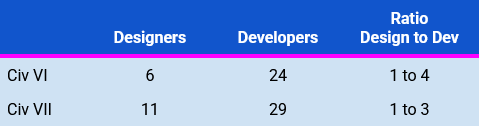
Based on the game credits (link[www.mobygames.com]), the number of Designers at Firaxis almost doubled between Civ VI and VII, while the number of developers role only modestly.
 .
.
Note: this was after de-duplication of the games credits for VII; the original number of Civ VII Designers was 34.
The ratio of designers to developers is extremely important. Fewer developers per designer means less resources to plan and build each feature out, particularly interactions with other systems and potential error conditions.
That's why almost every system in Civ VII feels so unpolished. Those features are still being finished, slowing down the process of addressing the game's issues. Redesigning a moving target is brutally difficult.
If you’re looking for the smoking gun for the Rule of Thirds violation, you’ve found it.
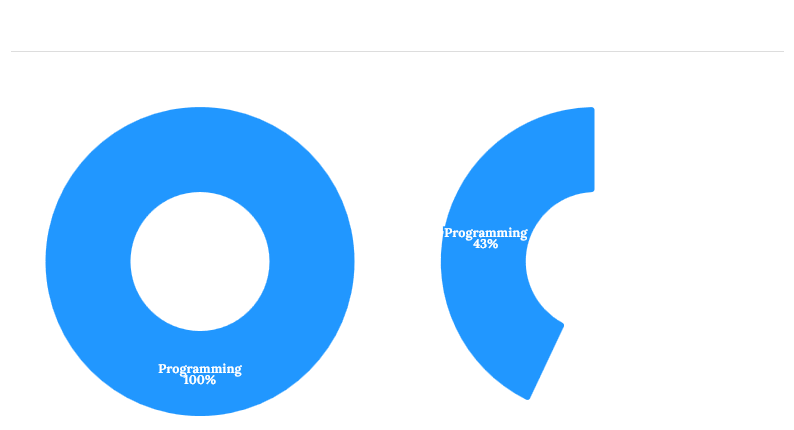
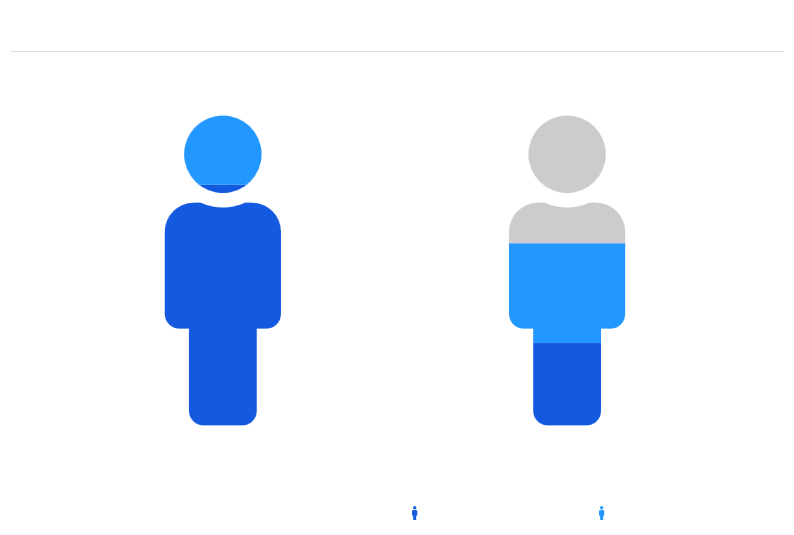
Only 43% of the Civ VII designers would have qualified to be designers on prior versions of Civilization. All of those people had worked on as codeers on Civ VI or Midnight Suns; none of the new Designers had coding experience on a AAA game.
Similarly, in terms of experience, 75% of the Civ VI designers had previously been on a design team for a major game. For Civ VII, that number fell to 29%. In fact, for 58% of the Civ VII designers it was their first major game - their primary experience was in the classroom at graduate programs.
This may seem elitist. But it has already had severe consequences. Nowhere is this more evident than the recent the Modern Age Yield disaster, where the designers' lack of technical ability and ignorance of basic software processes led to them bypassing standard bug evaluation procedures and jumping straight to nerfing Cultural and Economic Legacy Path progression, squandering months of precious time. It will require even more to reverse those blunders.
.Note: this was after de-duplication of the games credits for VII; the original number of Civ VII Designers was 34.
The ratio of designers to developers is extremely important. Fewer developers per designer means less resources to plan and build each feature out, particularly interactions with other systems and potential error conditions.
That's why almost every system in Civ VII feels so unpolished. Those features are still being finished, slowing down the process of addressing the game's issues. Redesigning a moving target is brutally difficult.
If you’re looking for the smoking gun for the Rule of Thirds violation, you’ve found it.
The Designer role in Civ VI versus Civ VII
While we're on the subject of Designers, let's take a look at the expertise and experience of the Civ VII designers. In Civ VI, the Designer role was called "Designer/Programmer" while in Civ VII it was "System Designer". That change alone speaks volumes about the erosion of the role. From Civ I to Civ VI, design has been done by someone who is also an experienced coder. PowerPoint jockeys will work miracles in Marketing, and Spreadsheet sorcerers will dazzle the finance people. But in keeping with the tradition of Civilization designers, you needed to be able to get down and dirty with the details of garbage collection.Only 43% of the Civ VII designers would have qualified to be designers on prior versions of Civilization. All of those people had worked on as codeers on Civ VI or Midnight Suns; none of the new Designers had coding experience on a AAA game.
Similarly, in terms of experience, 75% of the Civ VI designers had previously been on a design team for a major game. For Civ VII, that number fell to 29%. In fact, for 58% of the Civ VII designers it was their first major game - their primary experience was in the classroom at graduate programs.
This may seem elitist. But it has already had severe consequences. Nowhere is this more evident than the recent the Modern Age Yield disaster, where the designers' lack of technical ability and ignorance of basic software processes led to them bypassing standard bug evaluation procedures and jumping straight to nerfing Cultural and Economic Legacy Path progression, squandering months of precious time. It will require even more to reverse those blunders.
--Good players should be penalized
Power scaling in 4X games has a peculiar side-effect: snowballing, wherein early leads tend to compound over time. Success begets more success.
Experienced developers realize that snowballing, while unavoidable, is not necessarily undesirable. It is both a reward for a game well-played as well as a signal to the player that it might be time to increase the difficulty on their next play through.
Firaxis decided that snowballing is public enemy number one. Even worse, they decided to use Age transitions to stamp out this menace.
I shouldn’t have to explain that players don’t like having their work taken from them, as it makes them feel like they are not in control of their destiny (a major violation of one of the 4X Core values and Sid’s principles). Using the Age transition doubles down on this mistake by tainting a feature that long-time players were already unsure about. Age transitions have become synonymous with (and as popular as) income tax.
Experienced developers realize that snowballing, while unavoidable, is not necessarily undesirable. It is both a reward for a game well-played as well as a signal to the player that it might be time to increase the difficulty on their next play through.
Firaxis decided that snowballing is public enemy number one. Even worse, they decided to use Age transitions to stamp out this menace.
I shouldn’t have to explain that players don’t like having their work taken from them, as it makes them feel like they are not in control of their destiny (a major violation of one of the 4X Core values and Sid’s principles). Using the Age transition doubles down on this mistake by tainting a feature that long-time players were already unsure about. Age transitions have become synonymous with (and as popular as) income tax.
--If it's popular, we'll nerf it
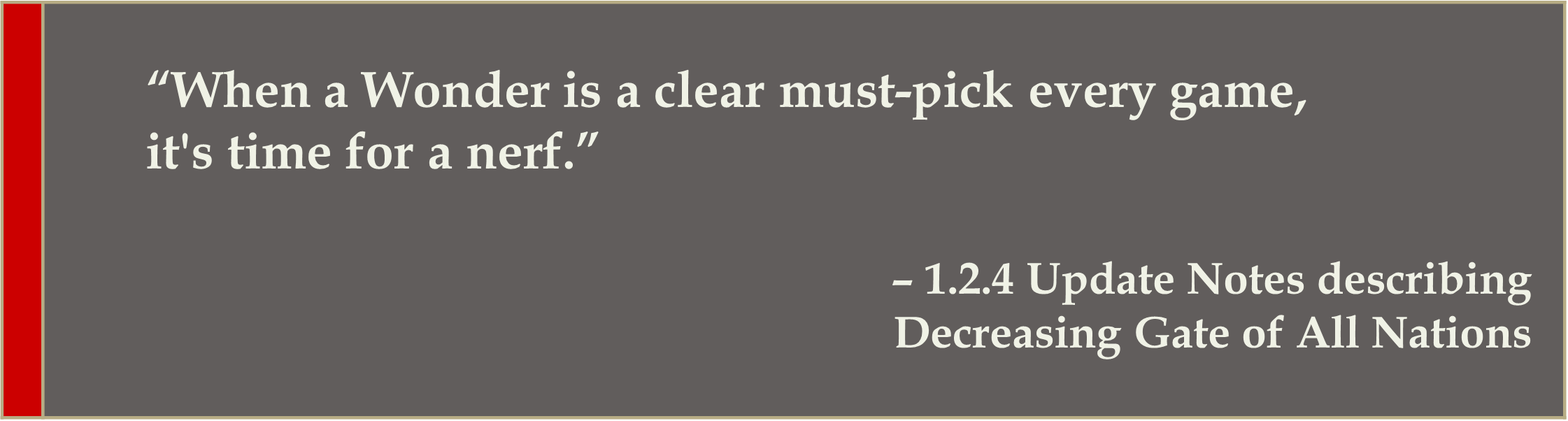
When Firaxis nerfed the Gate of all Nations in patch 1.2.4, they said the quiet part out loud:
 .
.
Firaxis, are you really sure this is the message you want to send? How do you think the community will perceive that? Do you think it will inspire confidence in your vision for the game?
 .
.
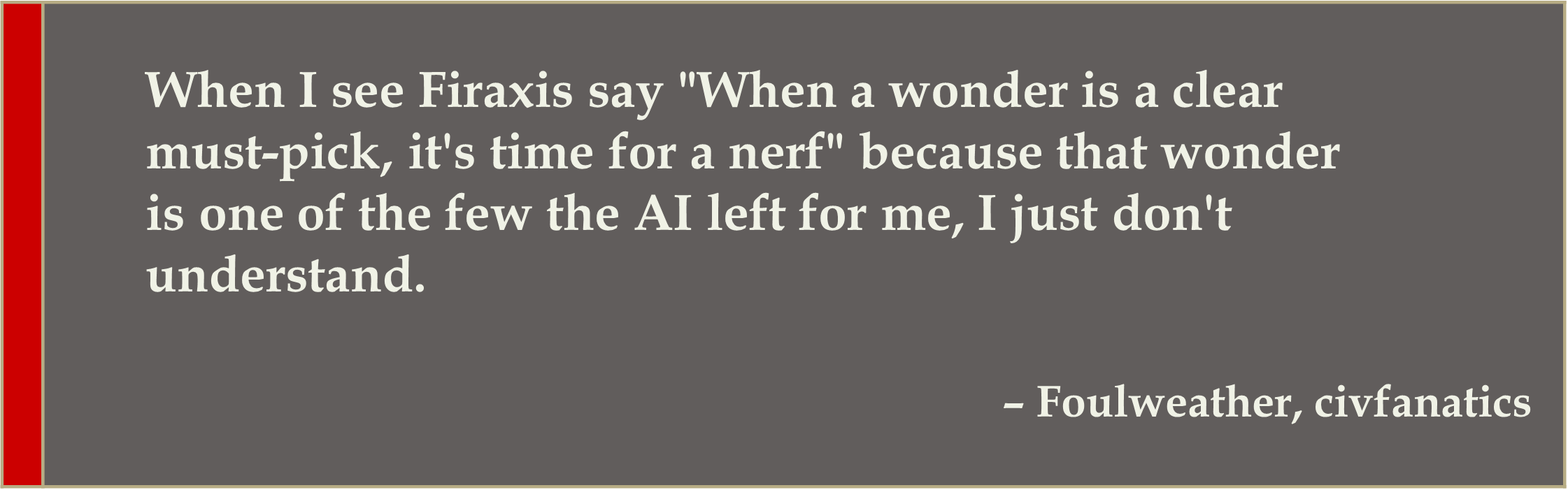
What's extremely strange is that Firaxis doesn't seemed to have considered the case Foulweather raised - that the Gate of All Nations might have been the only Wonder available at that point in the game. You'd be forgiven for thinking they jumped straight to nerfing the Wonder without asking any questions. But let's give them the benefit of the doubt - unless we see evidence they've done that more than once, there's no reason to conclude that they are negligent.
Players had been saying for a good while that the Modern Age passed much, much too quickly (link[forums.civfanatics.com]). So what was Firaxis' response - did they check that the code was working correctly? Of course not. They picked up their nerf hammer and went to town, boosting the prices of Explorers and Factories to slow Culture and Economic victories.
Think about that for a second - the yield levels were too high. And yet the designers instinct wasn't to look into the oversupply. It was to boost the prices. This wasn't a one-time mistake - they did this repeatedly over the space of multiple months and multiple patches. On top of that, they increased the city growth rate as well, pouring gasoline on the fire and making it scale faster to match the supercharged speed of the Modern Age.
The whole time, their spreadsheet model showed the game was working one way, but the code was working completely different way. And they blindly trusted in the spreadsheet model, ignoring the reality right in front of the eyes, never even considering that there might be a problem in the code.
The designers interfered in the standard bug handling process - bugs should have been profiled by Support or QA, then passed to the responsible programmer for investigation. This is a prime example of too many chefs in the kitchen, a designer with too much time on his hands stopped a bug from being addressed and instead poured gasoline on the fire.
As a result, all of the balance work the designers did was based on the busted yields. They weren't balancing the game they designed; they were balancing a completely different game. Firaxis never figured out that the game was not working as designed and documented - it was a player that found and documented it. Who knows how long Firaxis would have kept hammering away, nerfing indiscriminately?
It seems that Firaxis' default response is to nerf, even when it's obvious that they should be following standard software processes around profiling issues. It certainly sheds light on the nerfing of the Gate of All Nations. Why bother to investigate, understand, and fix a problem when you can just nerf your way out of it?
 .
.
And here's the real tragedy of the Modern Age yield issue. Once they fix their bugs, they’ll need to rebalance everything. All of the previous balancing work (2-3 patches’ worth) has been wasted effort. Effort that could have been spent fixing other parts of the game. All because of designer malfeasance.
Well it turns out that some buildings have hidden scaling that was either forgotten to be referenced in their descriptions or was coded by the same person who thought that Grocers should give +1 Food on unimproved tiles (because working unimproved tiles is totally a thing in Civ VII, lol).
In general, there are two issues here:
First, effects stack per building, per city (hello again, bridge economy). Every Laboratory gives +1 Science on quarters in all cities with a Laboratory. This means that if you have five Laboratories, these five cities will all get +5 Science on every quarter. If you got seven City Parks, each rural Vegetated tile in those seven cities will give +7 Happiness! Broken? Just a bit.
Second, these buildings do not actually check for Quarter but for districts with any two constructibles. Got a district with Ancient Walls and an Inn? Yes, that counts. Doesn't matter if it's just Walls. Doesn't matter if the building is from a previous age and should not count towards forming a Quarter.
Buildings affected:
.Firaxis, are you really sure this is the message you want to send? How do you think the community will perceive that? Do you think it will inspire confidence in your vision for the game?
.What's extremely strange is that Firaxis doesn't seemed to have considered the case Foulweather raised - that the Gate of All Nations might have been the only Wonder available at that point in the game. You'd be forgiven for thinking they jumped straight to nerfing the Wonder without asking any questions. But let's give them the benefit of the doubt - unless we see evidence they've done that more than once, there's no reason to conclude that they are negligent.
Exhibit A -- Modern Age yields (aka The Evidence):
This Reddit post (link, text below) details a discovery by a player that Modern Age yields are massively inflated due to two bugs in the building effect code. One that caused effects to be calculated on the total number of buildings of a particular type (instead of individually) and the second, which applied those huge bonuses to every tile with two buildings (apparently walls qualified as buildings as well).Players had been saying for a good while that the Modern Age passed much, much too quickly (link[forums.civfanatics.com]). So what was Firaxis' response - did they check that the code was working correctly? Of course not. They picked up their nerf hammer and went to town, boosting the prices of Explorers and Factories to slow Culture and Economic victories.
Think about that for a second - the yield levels were too high. And yet the designers instinct wasn't to look into the oversupply. It was to boost the prices. This wasn't a one-time mistake - they did this repeatedly over the space of multiple months and multiple patches. On top of that, they increased the city growth rate as well, pouring gasoline on the fire and making it scale faster to match the supercharged speed of the Modern Age.
The whole time, their spreadsheet model showed the game was working one way, but the code was working completely different way. And they blindly trusted in the spreadsheet model, ignoring the reality right in front of the eyes, never even considering that there might be a problem in the code.
The designers interfered in the standard bug handling process - bugs should have been profiled by Support or QA, then passed to the responsible programmer for investigation. This is a prime example of too many chefs in the kitchen, a designer with too much time on his hands stopped a bug from being addressed and instead poured gasoline on the fire.
As a result, all of the balance work the designers did was based on the busted yields. They weren't balancing the game they designed; they were balancing a completely different game. Firaxis never figured out that the game was not working as designed and documented - it was a player that found and documented it. Who knows how long Firaxis would have kept hammering away, nerfing indiscriminately?
It seems that Firaxis' default response is to nerf, even when it's obvious that they should be following standard software processes around profiling issues. It certainly sheds light on the nerfing of the Gate of All Nations. Why bother to investigate, understand, and fix a problem when you can just nerf your way out of it?
.And here's the real tragedy of the Modern Age yield issue. Once they fix their bugs, they’ll need to rebalance everything. All of the previous balancing work (2-3 patches’ worth) has been wasted effort. Effort that could have been spent fixing other parts of the game. All because of designer malfeasance.
(Reddit post) PSA: Some Modern age buildings are absolutely busted!
Did you ever wonder why Happiness stops being an issue in the Modern age despite having so many specialists? Why yields explode so fast?Well it turns out that some buildings have hidden scaling that was either forgotten to be referenced in their descriptions or was coded by the same person who thought that Grocers should give +1 Food on unimproved tiles (because working unimproved tiles is totally a thing in Civ VII, lol).
In general, there are two issues here:
First, effects stack per building, per city (hello again, bridge economy). Every Laboratory gives +1 Science on quarters in all cities with a Laboratory. This means that if you have five Laboratories, these five cities will all get +5 Science on every quarter. If you got seven City Parks, each rural Vegetated tile in those seven cities will give +7 Happiness! Broken? Just a bit.
Second, these buildings do not actually check for Quarter but for districts with any two constructibles. Got a district with Ancient Walls and an Inn? Yes, that counts. Doesn't matter if it's just Walls. Doesn't matter if the building is from a previous age and should not count towards forming a Quarter.
Buildings affected:
- Aerodrome: +1 Interception range stacks per Aerodrome in empire
- Cannery: +10% Growth stacks per Cannery in empire
- City Park: +1 Happiness on Vegetated tiles (actually only works on rural tiles, at least) stacks per City Park in empire
- Laboratory: +1 Science on Quarters stacks per Laboratory in empire, any tile with at least two constructibles counts.
- Stock Exchange: +1 Gold on Quarters stacks per Stock Exchange in empire, any tile with at least two constructibles counts.
- Tenement: +1 Happiness on Quarters stacks per Tenement in empire, any tile with at least two constructibles counts.
--Custom City names
When Ed Beach announced they had restored renaming cities (a feature dating back to Civ 1), I was nonplussed as Ed gushed about the designers’ ability to google ancient city names and implied that justified ruining player immersion and crippling player investment.
 .
.
News flash: It's the players' story, not the devs'. You can’t “build something you believe in” if someone dictates what you name it. How would you feel if the doctor who delivered your baby got to choose the name?
You can tell Firaxis really did not like being told to restore custom city names, because in an incredibly petty move, they made sure the custom names display in ALL CAPS. There's no better showcase for the arrogance of the designers and their utter disdain for customers.
Removing the ability to change names is so obviously a bad idea that it should have immediately been killed and the person who proposed it laughed at. That it made it to release speaks to a culture of toxic positivity where common sense is shouted down.

.News flash: It's the players' story, not the devs'. You can’t “build something you believe in” if someone dictates what you name it. How would you feel if the doctor who delivered your baby got to choose the name?
You can tell Firaxis really did not like being told to restore custom city names, because in an incredibly petty move, they made sure the custom names display in ALL CAPS. There's no better showcase for the arrogance of the designers and their utter disdain for customers.
Removing the ability to change names is so obviously a bad idea that it should have immediately been killed and the person who proposed it laughed at. That it made it to release speaks to a culture of toxic positivity where common sense is shouted down.
--Games must be finished
Firaxis stated that for Civ VII, they wanted to address the problem that "players don't finish games."
I'm reminded of the story of Abraham Wald and the bullet-hole patterns on surviving WW2 bombers. Failed attempts to increase bomber survival rate concentrated on armoring the areas with the bullet holes. Wald realized the areas WITHOUT the bullet holes were where the planes that didn't survive were hit and that those areas were what needed more armor.
Similarly, the Civ series had thirty years of phenomenal success despite players not finishing games. So why on earth would they feel that finishing games is a problem that needs to be addressed?
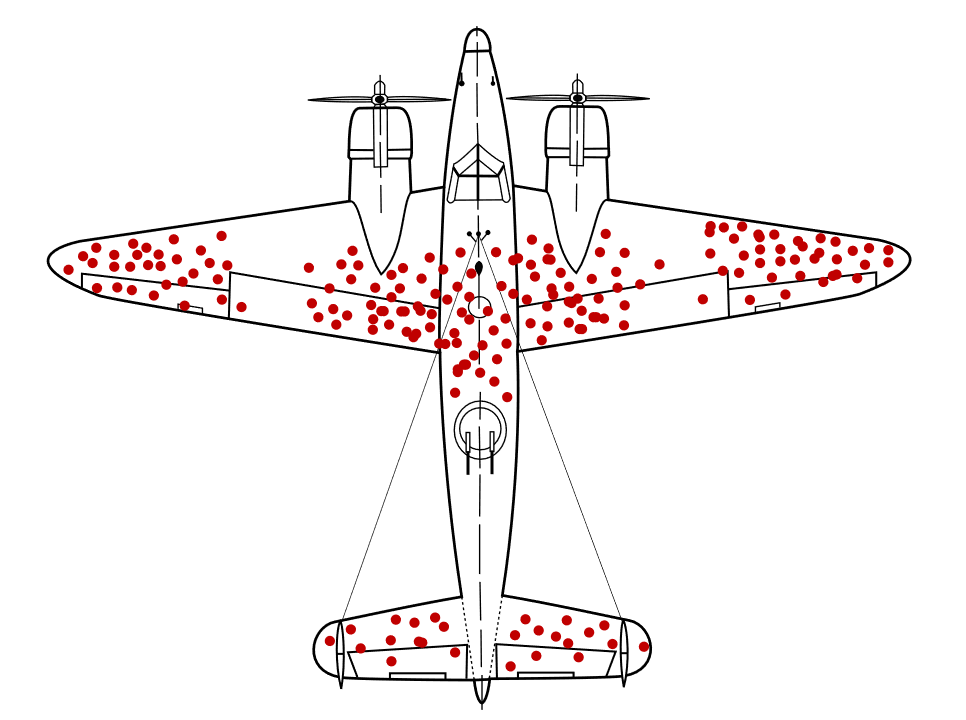
Illustration of aggregate damage pattern on a WW2 bomber, showing that a similar plane survived a single hit to the fuselage or fuel system close to 95% of the time, but a hit to the engine only 60% of the time.
(Source:Wikipedia[commons.wikimedia.org], Author: Martin Grandjean (vector), McGeddon (picture), US Air Force (hit plot concept) License: CC BY-SA 4.0)
I'm reminded of the story of Abraham Wald and the bullet-hole patterns on surviving WW2 bombers. Failed attempts to increase bomber survival rate concentrated on armoring the areas with the bullet holes. Wald realized the areas WITHOUT the bullet holes were where the planes that didn't survive were hit and that those areas were what needed more armor.
Similarly, the Civ series had thirty years of phenomenal success despite players not finishing games. So why on earth would they feel that finishing games is a problem that needs to be addressed?
Illustration of aggregate damage pattern on a WW2 bomber, showing that a similar plane survived a single hit to the fuselage or fuel system close to 95% of the time, but a hit to the engine only 60% of the time.
(Source:Wikipedia[commons.wikimedia.org], Author: Martin Grandjean (vector), McGeddon (picture), US Air Force (hit plot concept) License: CC BY-SA 4.0)
--Spreadsheet-driven design
The game play systems in Civ VII and how they work together do not feel like they were handcrafted by an experienced game designer. Instead, it feels much more like the systems were created in a spreadsheet model and implemented as is.
An experienced developer would quickly point out that what works in a spreadsheet feels fundamentally off in actual gameplay. Certain gameplay systems, such as Attributes and Policies, end up having an abnormally high leverage impact, while others, such as Wonders, feel positively mediocre.
The End Result: Boring leaders and civs with weak-sauce abilities
Case study: Ashoka, World-Renouncer, has an ability that “Buildings get +1 Happiness Adjacency on improvements".
Reread Ashoka’s ability description until you feel you understand it and then ask yourself:
But don’t take my word for it – Firaxis has admitted as much. Every time they nerf a feature with useful abilities (Imago Mundi, Future Techs) they are forced to concede that it “overshadowed … leader and civ abilities.” It’s a tacit admission by Firaxis that “we nerfed it because it highlights how mediocre Civ VII’s leader and civ abilities are.”
It's also interesting the the Ara: History Untold team learned from Civ VII's mistakes. In their Dev Journal, "The Great Differentiation" they stated that "We wanted to avoid simple numerical differences or passive rewards." Will the Civ VII designers admit the approach isn't working, or will they pursuse the insanity path and make ever more stat changes, hoping that the next patch will finally result in a game that's fun to play?
An experienced developer would quickly point out that what works in a spreadsheet feels fundamentally off in actual gameplay. Certain gameplay systems, such as Attributes and Policies, end up having an abnormally high leverage impact, while others, such as Wonders, feel positively mediocre.
The End Result: Boring leaders and civs with weak-sauce abilities
Case study: Ashoka, World-Renouncer, has an ability that “Buildings get +1 Happiness Adjacency on improvements".
Reread Ashoka’s ability description until you feel you understand it and then ask yourself:
- How long did it take you to parse out the meaning?
- Does it sound interesting, or does it sound like word salad?
- Based on that description, does Ashoka WR feel like a fun leader to play?
- Can you tell just by reading it if it’s a good ability?
- Are you aware that the ability effectively resets with each Age transition (because obsolete buildings), and that the resulting drop in Happiness could kneecap your yields for the early part of a new age?
- If you showed that ability description to a Civ V or VI player, do you think it would entice them to play Civ VII?
- If you showed the ability description to an imaginary “non-traditional” audience, would they be interested in Civ VII?
But don’t take my word for it – Firaxis has admitted as much. Every time they nerf a feature with useful abilities (Imago Mundi, Future Techs) they are forced to concede that it “overshadowed … leader and civ abilities.” It’s a tacit admission by Firaxis that “we nerfed it because it highlights how mediocre Civ VII’s leader and civ abilities are.”
It's also interesting the the Ara: History Untold team learned from Civ VII's mistakes. In their Dev Journal, "The Great Differentiation" they stated that "We wanted to avoid simple numerical differences or passive rewards." Will the Civ VII designers admit the approach isn't working, or will they pursuse the insanity path and make ever more stat changes, hoping that the next patch will finally result in a game that's fun to play?
--Let players design the game in Settings
Sid Meier cautioned against exposing too many game design decision in the Settings menu. The designers ignored Sid yet again, putting crises, Age transitions, and even Legacy Paths as optional gameplay settings.
 .
.
Based on the absence of a roadmap and from the way Firaxis has been abandoning prior design decisions by making them optional, from the outside looking in it would appear as though Firaxis is thrashing. I’m really hoping that those looks are deceiving, and that the Firaxis designers are quietly constructing a larger whole and are intending to assemble those optional pieces into a unified gameplay system (e.g., unify Continuity, Regroup, and Collapse into game play similar to VI's Golden, Normal, and Dark Ages).
If not, Firaxis is in danger of losing Civ VII’s identity – it could splinter into different games, which will complicate future design work, as the different settings permutations could shackle the ability to make other game play changes.
.Based on the absence of a roadmap and from the way Firaxis has been abandoning prior design decisions by making them optional, from the outside looking in it would appear as though Firaxis is thrashing. I’m really hoping that those looks are deceiving, and that the Firaxis designers are quietly constructing a larger whole and are intending to assemble those optional pieces into a unified gameplay system (e.g., unify Continuity, Regroup, and Collapse into game play similar to VI's Golden, Normal, and Dark Ages).
If not, Firaxis is in danger of losing Civ VII’s identity – it could splinter into different games, which will complicate future design work, as the different settings permutations could shackle the ability to make other game play changes.
--Protect players from adversity
Something about the maps and terrain seemed off, but it wasn’t until I saw the video “What’s going on with Civ VII’s balance?” that it clicked. One of the points mentioned is that there is no “bad” terrain in Civ VII – even desert terrain has good food and production. It’s impossible to have a poor starting location.
Ten million players have successfully overcome bad starting locations. Ten million players have survived the heartbreak of another civ completing the Pyramids one turn faster. And yet those people kept on playing for “one more turn”. If anything, the experience drove them to get better.
So how did Firaxis go about fixing something that wasn’t broken? Using World Wonders as an example, did Firaxis make it easier to see other civs’ in-progress Wonders? Or add interesting mechanics for rushing production? Or espionage options for sabotaging Wonder production?
No, Firaxis emasculated wonder effects, turning them from World Wonders into Vanity Districts. Firaxis abandoned a signature feature of the Civilization series because they disrespected the customer base enough to think they couldn’t handle a little adversity.
Why on earth would Firaxis add unremovable training wheels to the game?
Ten million players have successfully overcome bad starting locations. Ten million players have survived the heartbreak of another civ completing the Pyramids one turn faster. And yet those people kept on playing for “one more turn”. If anything, the experience drove them to get better.
So how did Firaxis go about fixing something that wasn’t broken? Using World Wonders as an example, did Firaxis make it easier to see other civs’ in-progress Wonders? Or add interesting mechanics for rushing production? Or espionage options for sabotaging Wonder production?
No, Firaxis emasculated wonder effects, turning them from World Wonders into Vanity Districts. Firaxis abandoned a signature feature of the Civilization series because they disrespected the customer base enough to think they couldn’t handle a little adversity.
Why on earth would Firaxis add unremovable training wheels to the game?
--The Phantom Audience
Firaxis made the same mistake as Bioware did with Dragon Age: Veilguard – dumbing down the game in pursuit of an imaginary "non-traditional" audience. This approach did not end well at all for Bioware.
Though experiment: if someone invented a quilting kit that didn't require sewing, would you try it out? Probably not, but not because quilting isn't fun. It's because the quilt is incidental - quilting is a social activity. It requires dedicated time for a group of people to meet in person and dedicated space to house the quilt in between quilt-making sessions.
Now apply that same dispassionate viewpoint to Civilization. To the player, the attraction is not about the game. It's about the sense of accomplishment, slowly building a strategy to achieve greatness from humble origins. And like quilting, Civ has its own real-life requirements - a dedicated swath of time free from distractions.
All this is to say that while there is certainly room to grow the audience by 20% there are multiple reasons why a potential audience from a different demographic would exclude themselves. Not the least of which is a $70 price tag.
Though experiment: if someone invented a quilting kit that didn't require sewing, would you try it out? Probably not, but not because quilting isn't fun. It's because the quilt is incidental - quilting is a social activity. It requires dedicated time for a group of people to meet in person and dedicated space to house the quilt in between quilt-making sessions.
Now apply that same dispassionate viewpoint to Civilization. To the player, the attraction is not about the game. It's about the sense of accomplishment, slowly building a strategy to achieve greatness from humble origins. And like quilting, Civ has its own real-life requirements - a dedicated swath of time free from distractions.
All this is to say that while there is certainly room to grow the audience by 20% there are multiple reasons why a potential audience from a different demographic would exclude themselves. Not the least of which is a $70 price tag.
--Enswitchification
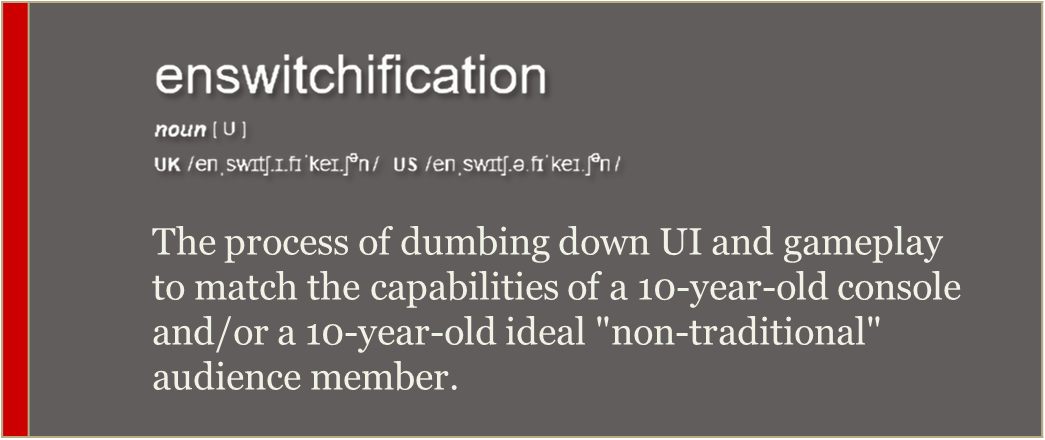
4X UIs are a delicate balance of showing enough information while not overwhelming the user. Firaxis jettisoned their accumulated UI experience, and instead pioneered a new design concept: Enswitchification, tethering the UI with the restraints of an aging console platform. Instead of investing in developing a PC skin and a Console skin to give each user type a UI experience optimized for that platform type, Firaxis created a Least Common Denominator UI that was a poor experience everywhere.
 .
.
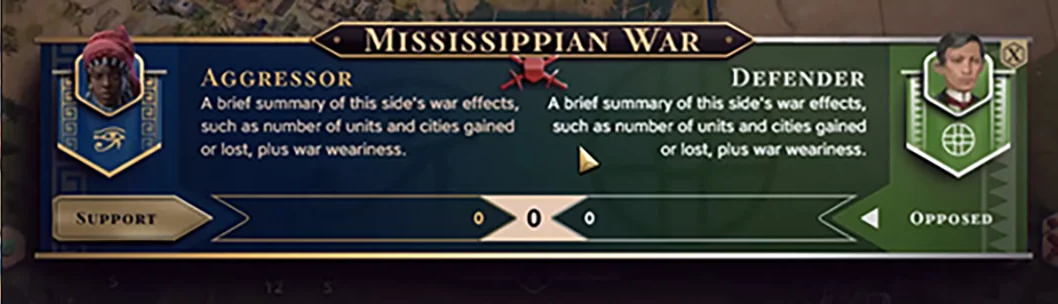
Why did Firaxis spend their money on hiring historians rather than on developing a UI that presented the critical information needed for gameplay decisions?
 .
.
Too complicated. Our target audience might start tweeting on the tiktoks. Enswitchify it.
 .
.
Extra! Now we're speaking in cursive!
.Why did Firaxis spend their money on hiring historians rather than on developing a UI that presented the critical information needed for gameplay decisions?
.Too complicated. Our target audience might start tweeting on the tiktoks. Enswitchify it.
.Extra! Now we're speaking in cursive!
--Others
Civilization Clue - Immersion was killed in the Diplomacy screen with a 3rd-person view
In previous versions of Civ, the other leader was staring at you across the negotiating table, cajoling and intimidating you in their own language, immersing you as the leader of your civ. In Civ VII, you’re reduced to a spectator, watching someone else speak for your civilization. And apparently they got Minecraft Villagers to do the voice acting.“Build something you believe in” means you can disregard the player base and market reality
I’m pretty sure the marketers did not foresee how on the nose the slogan of “Build something you believe in” (BSYBI) would turn out to be.I assume it was meant as a message of empowerment. If so, it worked better than the marketers could have hoped for – the Designers heard that slogan, were inspired, and dreamed big, thinking “It’s ok to ignore the loyal player base. We’re not doing it for them. We’re doing it for ourselves, because we believe in it. How could we ever fail when our intentions are pure, and our conviction is strong?”
Using conviction as the sole compass ignores the necessity of external feedback and market validation. Passion alone is not enough for practical success.
Conclusion: Flawed Design Principles
In total, these design principles paint a picture of an inexperienced design team determined to dictate how the game “should be played”. What's mystifying is that none of them were impacted by the recent layoff; others paid the price for the designers' malfeasance.But you really can’t blame a puppy that isn’t housebroken; it’s a failure of leadership. When the inmates are allowed to run the asylum, the result is a comedy of errors. If you paid $70+ for that result, the comedy turns into a tragedy.
Root cause analysis
The primary cause of Civilization VII’s woes springs from developer inexperience. It’s become obvious that over the last ten years there has been enough turnover at Firaxis that the experience level dropped below critical mass, as seen by multiple epic fails:
- Ignoring Sid Meier’s advice (especially the Rule of Thirds)
- Not understanding the player archetypes and using their feedback inappropriately (Sid again)
- Not fully understanding the 4X genre and what are the third-rail characteristics (the “4X Core”)
- Fixing “problems” that didn’t need solving (Players don’t finish games)
- Concocting design principles that had little basis in fact (e.g., “Snowballing is bad”)
- Designing and balancing for multiplayer at the expense of single-player
- Over-streamlining systems to the point where they lost meaning (e.g., catastrophes and repairs)
- Needlessly aggravating the core player base by removing basic long-standing features (e.g., renaming cities, one more turn), generating feature debt that delayed addressing the real issues
The secondary cause is executive negligence, particularly failure to: - Enforce Rule of Thirds and kill half-baked ideas (Crises) that diluted development resources
- Force disciplined hypothesis testing of proposed design principles
- Ask pointed questions in design reviews (“If you have to create a ‘Repair all’ button, doesn’t that indicate a bigger problem with the system itself?”)
- Recognize the need for a dual-UI strategy (PC and console)
- Push for an Early Access release on Steam and focus on getting the PC version right, then quickly expanding to other platforms after full release
- Prioritize Steam Workshop support to ship during Early Access (a large number of mods on civfanatics have still not been ported as those modders have abandoned the game)
- Delay the game when it was clear it was not ready for prime time
Where's the Vision?
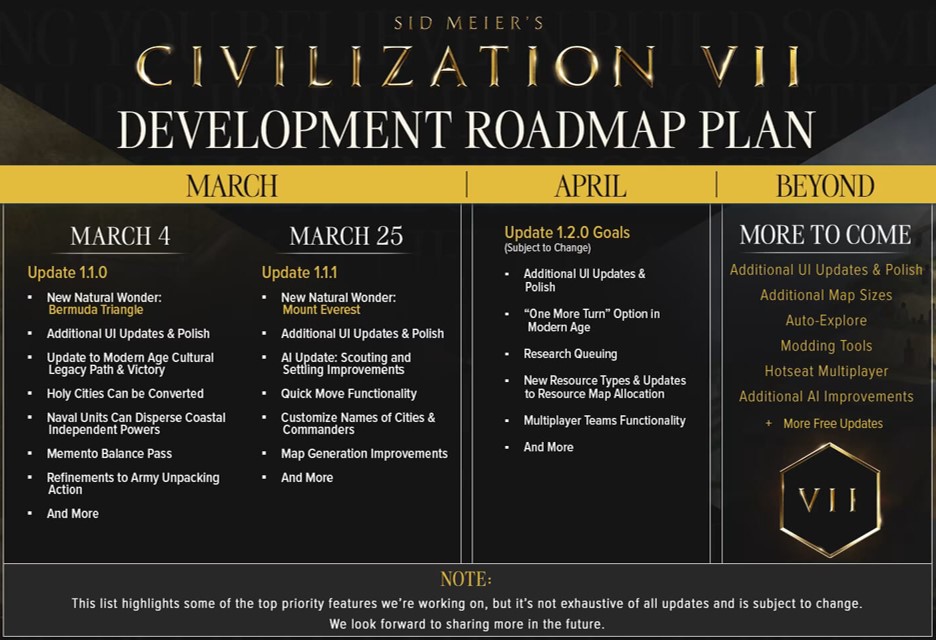
Throughout all of this, what’s conspicuously been missing is a Roadmap. Just so we’re clear, the graphic below is not a roadmap. It’s a grab bag of disparate features.
 .
.
A roadmap sets out a vision -- a destination to reach and describes the paths to that destination. For comparison, check out the Ara: History Untold Dev Journals and the vision they present:
Those thought leadership claims aren't forever; they reset about every five years or so. Interestingly enough, with both Humankind and Millennia failing to stick the landing, the window for establishing thought leadership in the "stone age to space age" 4X space was wide open.
You'll note the use of the past tense in that statement. That's because the Ara: History Untold 2.0 update (link) just staked out thought leadership claims for a significant portion of the landscape. Oxide Games (and Stardock) are attempting to "run the table" and make Firaxis play by Oxide's rules. And so far they are succeeding -- Ara 2.0 is making a compelling case for establishing the definition and rules for what a next-gen "stone age to space age" 4X should be.
And Firaxis? Firaxis hasn't even shown up to compete. They are in danger of forfeiting thought leadership in the genre that they created.
.A roadmap sets out a vision -- a destination to reach and describes the paths to that destination. For comparison, check out the Ara: History Untold Dev Journals and the vision they present:
- DJ3 - What's Next for Ara: History Untold?
- DJ5 - The Great Differentiation
- DJ6 - The Great AI Awakening
The Thought Leadership land rush
A roadmap does something even more important than just setting out a vision and listing features. Done well, it establishes the developer and game as a thought leader. It's like staking prospecting claims in a gold rush. if you're the first to establish a compelling vision for a particular gameplay area or mechanic and are then able to execute, you'll be seen as the innovator in that area. Even if someone else does the same thing 20% better, it won't matter - they'll be seen as the follower.Those thought leadership claims aren't forever; they reset about every five years or so. Interestingly enough, with both Humankind and Millennia failing to stick the landing, the window for establishing thought leadership in the "stone age to space age" 4X space was wide open.
You'll note the use of the past tense in that statement. That's because the Ara: History Untold 2.0 update (link) just staked out thought leadership claims for a significant portion of the landscape. Oxide Games (and Stardock) are attempting to "run the table" and make Firaxis play by Oxide's rules. And so far they are succeeding -- Ara 2.0 is making a compelling case for establishing the definition and rules for what a next-gen "stone age to space age" 4X should be.
And Firaxis? Firaxis hasn't even shown up to compete. They are in danger of forfeiting thought leadership in the genre that they created.
Conclusion: Hope is not a strategy
Every time Firaxis had the chance to make a tough decision that would cause short-term pain but put them on the path to recovery, they chose the easy way out.
As a result, six months later, very little has changed. And now, Endless Legends 2 and Ara 2.0 are releasing, and have lured away most of the content creators and the buzz in the 4X sphere. Unless Firaxis follows Ara's lead and overhauls leaders and civs away from statistics and passive abilities, stops the self-destructive nerfing and balance jihad, and restores player interaction and a moderate level of complexity to the game, then it's a foregone conclusion: Civ VII will not stand the test of time.
And that puts Firaxis in a dangerous position. With Marvel's Midnight Suns not being a a huge hit either, Firaxis would do well to remember the lessons of Monolith, Bioware, and Bungie. Past success is no guarantee of continued survival.
Firaxis is running out of time; if they don't get the ship righted by the first anniversary of the game, much more than Civ VII is at risk.
Pros:
Cons:
I suspect those weaknesses will fade over time as I play more, But overall, I'm already feeling that that Ara 2.0 has set the bar very high for what a next-gen "stone age to space age" 4X should be.
https://store.steampowered.com/app/2021880/Ara_History_Untold_Anniversary_Edition/
What they should have done:
What they did instead:
Articulate a clear vision as to what the recovery direction and goals were
Moved multiple gameplay systems into settings options, splintering both the the gameplay experience and the game's identify
Clamped down on the Designers and force a focused set of priorities developers to work on
Implemented minor stat changes across a wide set of areas, which looked impressive but were only skin deep
Create a PC-specific UI
Made multiple small changes that were lip-service to fixing the UI rather than the overhaul desperately needed
Stop continued balancing and nerfing based on data they knew was bad
Focused their reporting on data quality before making changes to gameplay that they'll need to redo over again
Hire an experienced QA executive from the outside
Threw people at the problem, attempting to brute force it with 2K QA resources
As a result, six months later, very little has changed. And now, Endless Legends 2 and Ara 2.0 are releasing, and have lured away most of the content creators and the buzz in the 4X sphere. Unless Firaxis follows Ara's lead and overhauls leaders and civs away from statistics and passive abilities, stops the self-destructive nerfing and balance jihad, and restores player interaction and a moderate level of complexity to the game, then it's a foregone conclusion: Civ VII will not stand the test of time.
And that puts Firaxis in a dangerous position. With Marvel's Midnight Suns not being a a huge hit either, Firaxis would do well to remember the lessons of Monolith, Bioware, and Bungie. Past success is no guarantee of continued survival.
Firaxis is running out of time; if they don't get the ship righted by the first anniversary of the game, much more than Civ VII is at risk.
What to play in the mean time
I'd highly recommend checking out the Ara: History Untold 2.0 update. The more I play it, the more I'm feeling it hit much closer to the mark of what Civ VII should have been. Reading the overview, over and over again I found myself thinking "wow, I wish Civ VII had taken that approach."Pros:
- The supply-chain aspects are still there but toned down, and are now more like an added layer of depth for Production, similar to the Culture depth that was introduced in Civ V.
- The Paragons (Heroes) are partly city advisors but also can be slotted into your government in roles, allowing you to augment your play style. It does what Civ-switching in VII attempted to do but without shattering immersion or throwing away your previous work.
- The ability to undo actions by cancelling the orders makes me much less worried that I might mess something up and much more willing to experiment.
Cons:
- I'm still getting used to the irregularly shaped regions, though I suspect that they subtly work to limit Infinite City Sprawl.
- The UI, while leaps and bounds beyond Civ VII's, is a lot to take in at first. I do wish they 'd hidden a couple of sections of the UI in the tutorial and gradually revealed them over the first 20-30 turns.
I suspect those weaknesses will fade over time as I play more, But overall, I'm already feeling that that Ara 2.0 has set the bar very high for what a next-gen "stone age to space age" 4X should be.
https://store.steampowered.com/app/2021880/Ara_History_Untold_Anniversary_Edition/
Appendix - Base issue list
Author’s note: One of the biggest difficulties with the discussion around Civ VII is that there are so many issues and certain ones are so divisive that they suck all the oxygen out of the room. The more subtle and arguably more damaging problems are only rarely surfaced and discussed, and I wanted to make sure that while covering many issues, I dedicated sufficient air time to those subtle issues.
For this reason, I split the issues into categories for analysis. As I did that analysis, over time the “ABCs” narrative coalesced and became the central theme. Though I didn't use the categorization in the main text, I retained it here as I wanted to make sure people knew that I'd cast a wide net and not simply cherry-picked certain items.
For this reason, I split the issues into categories for analysis. As I did that analysis, over time the “ABCs” narrative coalesced and became the central theme. Though I didn't use the categorization in the main text, I retained it here as I wanted to make sure people knew that I'd cast a wide net and not simply cherry-picked certain items.
Issues by Category
Unforced errors: obvious errors that were avoidable give the game an unpolished, "beta" feel
- Amateurish UI
- Uninformative UI - critical information was buried under multiple clicks, if not outright unavailable
- Undocumented systems - quarters
- Horrendous QA (even on tent pole features such as prior-age building yields)
- Bad land unit pathing (esp near rivers, also ignores roads)
- Strange merchant pathing (this one has an explanation - apparently the AI uses Merchants as scouts, so they’ll prefer a longer route if they can reveal a few more tiles. Unfortunately, the player Merchants use the same logic so you can end up with the path to establish a trade route taking 5-10 extra turns)
- Bad naval unit pathing (routing into ocean when not needed)
- Cross-map unit blockage (incredibly annoying, especially with Treasure Convoys)
- "Unable to save file" bug (regression introduced in 1.2.1, still present as of 1.2.3)
Insult to injury: features present in prior version which were needlessly removed (or dropped due to Nintendo Switch limitations)
- Renaming of cities (Civ I)
- Auto-explore (Civ I/II)
- One more turn ( Civ I/II)
- Restart
- Hot seat multiplayer
- Map sizes
- Map lenses
- Map search
- Strategic map (Civ II?)
- Color coding
- Domination victory (Civ I)
- Popular leaders (e.g., Cleopatra, Victoria, Tokugawa) ($$$)
Lightning rod problems: new features poorly designed and implemented or returning systems oversimplified
- Ages
- Power resets on ages - the better you did, the more you were punished
- Destructive Civ switching
- Distant Lands
- Crises
- Environmental catastrophes
- Legacy paths (aka win conditions)
- Map design
- Religion
- Diplomacy
- Treasure fleets (esp because this gated cities in the Modern Age)
- Treasure Convoys (major improvement, but undermines goal to make naval fleets matter)
- Trade (esp trading range limits)
- Settlement limits
- Archaeology
Fundamental issues: the biggest issue by far is that despite all of the new features, the game has very little replayability. After about the third play through, everything starts to feel the same.
- "Balance"/FOMO
- Interaction
- Agency
- Inability to counter opponent moves (e.g., predatory religious conversions)
- Excessive linearity of Legacy Paths
- Power scaling correlated to Attributes and Policies versus player decisions and actions (especially where they happen irrespective of player actions and simply accrue based on tech tree progress.) Players quickly realize that getting to Future Techs/Civics and stacking attribute points is much better than most buildings. (nerfed in 1.2.3, naturally. See "agency")
- Low-payback improvements - Improvements which come too late in an age and provide limited or negative ROI
- Ornamental improvements - improvements which look good at first glance but made little difference in reality, leading to disillusionment. World Wonders are the poster child for this problem
- Over-reliance on metadata - very subtle but powerful issue, responsible for leaders feeling "samey"
Sources
GDC talks
boesthius Is Civ 7 Good Yet? My Honest Feelings On The Game and The Future of Civ 7
Civ Lifer The Civilization Game that ruined the Franchise
Not Daily Civ 7 News What’s Going on with Civ VII’s Balance?
The Saxy Gamer Everything I hate about Civ 7
Marbozir Civilization 7: What I Actually Dislike
SecondWind Marvel Rivals Is Beating Overwatch Because It's Broken
- Sid Meier Psychology of Game Design
- Sid Meier Interesting Decisions
- Soren Johnsen My Elephant in the Room: An ‘Old World’ post-mortem
- Ed Beach Absolutely No Pressure: Continuing a Successful Game Series with Civilization VI
- Are you a min-maxer, or are you just good?
- Why Switch players blew up Civ VII
- How Firaxis overlooked the most important players’ feedback
- Are Firaxis Devs distancing themselves from Civ VII
- Is Firaxis really doing this?
- VII Myths about Civ players that Fooled Developers at Firaxis
- Did Firaxis Developers Break Sid Meier’s Rule of Thirds?
- Six things Firaxis Developers Got Wrong about Civ VII
- Civ VII has broken my heart
boesthius Is Civ 7 Good Yet? My Honest Feelings On The Game and The Future of Civ 7
Civ Lifer The Civilization Game that ruined the Franchise
Not Daily Civ 7 News What’s Going on with Civ VII’s Balance?
The Saxy Gamer Everything I hate about Civ 7
Marbozir Civilization 7: What I Actually Dislike
SecondWind Marvel Rivals Is Beating Overwatch Because It's Broken