

Forza Horizon 5 Car Performance Tuning Guide
 DIE Sh4rk
(46 ratings)
Jul 2, 2024 @ 4:43am2,20392
ClassesCo-opGameplay BasicsModding or ConfigurationMultiplayerEnglish
1. Understanding Car Tuning Basics
Before diving into the specifics, it’s crucial to understand what tuning entails and why it's important.
Why Tune Your Car?
Why Tune Your Car?
- Improve Handling: Fine-tuning your suspension and alignment can enhance your car’s handling, making it easier to navigate corners at high speeds.
- Optimize Performance: Adjusting the engine and drivetrain settings can maximize your car’s acceleration and top speed.
- Personalize Driving Experience: Tailor your car's behavior to your driving style for a more enjoyable and competitive experience.
2. Tuning Menu Overview
In Forza Horizon 5, you can access the tuning menu from the Garage. Here’s a quick overview of the options available:
It will give this menu below:
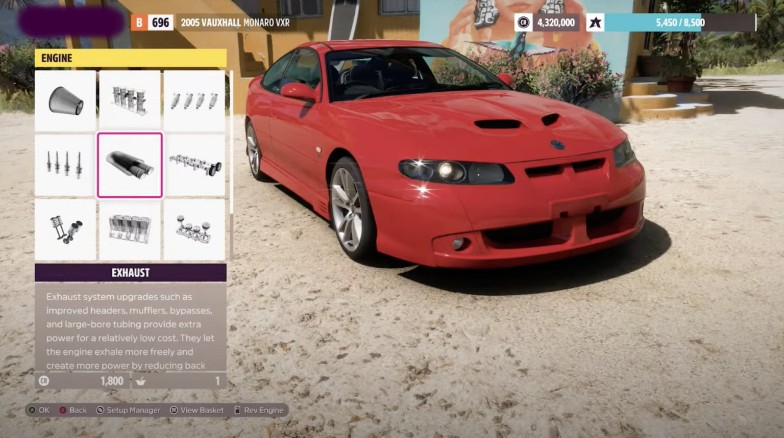
- Tires: Adjust tire pressure to affect grip and responsiveness.
- Gearing: Change gear ratios for better acceleration or top speed.
- Alignment: Modify camber, toe, and caster to improve handling.
- Anti-Roll Bars: Balance the car's stiffness to reduce body roll.
- Springs: Set the spring rates for better suspension performance.
- Damping: Adjust rebound and bump stiffness for improved stability.
- Aero: Fine-tune downforce to balance speed and grip.
- Brakes: Modify brake bias to control braking performance.
- Differential: Adjust the power distribution between wheels for better traction.
It will give this menu below:
3. Preset Downloading
It should be noted that you can download other user's presets in the garage as well, however these are usually locked and so you cannot change any settings on the car.
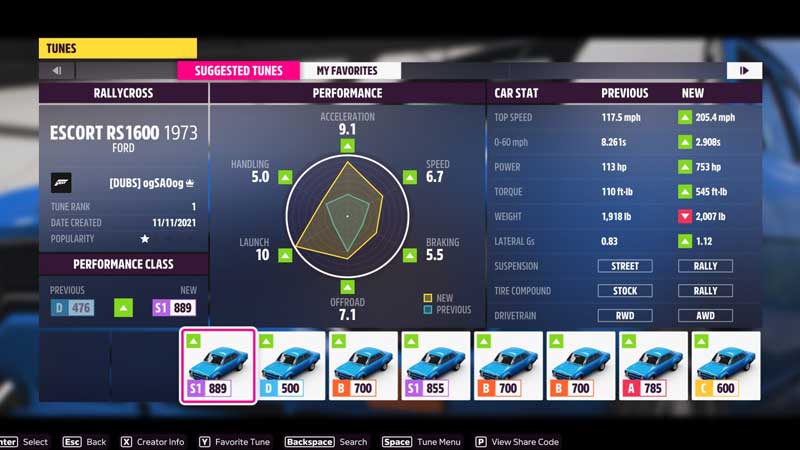
Searches can be refined using tags if you're looking for a specific set-up.
Searches can be refined using tags if you're looking for a specific set-up.
4. Detailed Tuning Guide
Tires
Tire Pressure:
Suggested Settings:
- Front/Rear Pressure: Lower pressure increases grip but can reduce top speed. Higher pressure decreases grip but can increase speed.
Suggested Settings:
- For off-road and rally races: 26-28 PSI
- For street races: 28-30 PSI
Gearing
Final Drive Ratio:
- Shorter gears (higher numbers) improve acceleration but can reduce top speed.
- Longer gears (lower numbers) increase top speed but can reduce acceleration.
- For tracks with many corners: Shorter gears
- For tracks with long straights: Longer gears
Alignment
Camber:
- Negative camber improves cornering grip.
- Too much negative camber can reduce straight-line speed.
- Toe-in improves straight-line stability.
- Toe-out improves cornering response.
- Higher caster angles improve stability and cornering grip.
- Camber:
- Front: -1.5 to -2.5,
- Rear: -0.5 to -1.5
- Front: -1.5 to -2.5,
- Toe:
- Front: 0 to 0.2,
- Rear: 0 to -0.2
- Front: 0 to 0.2,
- Caster: 5.0 to 7.0
Anti-Roll Bars
Front/Rear Anti-Roll Bars:
- Stiffer bars reduce body roll but can make the car less forgiving over bumps.
- Softer bars increase comfort but can reduce cornering precision.
- Balance stiffness based on the car's weight distribution and your driving style.
Springs
Spring Rates:
- Stiffer springs improve response but can reduce traction on bumpy surfaces.
- Softer springs improve traction but can reduce response.
- Adjust based on car weight and track surface.
Damping
Rebound Stiffness:
- Controls how quickly the suspension returns to its normal position after compressing.
- Controls how much the suspension compresses over bumps.
- Higher rebound for smoother tracks, lower for rough tracks.
- Adjust bump stiffness to balance between comfort and control.
Aero
Front/Rear Downforce:
- More downforce increases grip but reduces top speed.
- Less downforce increases speed but reduces grip.
- Increase downforce for tracks with many corners.
- Decrease downforce for tracks with long straights.
Brakes
Brake Bias:
- Front bias increases braking stability but can lead to understeer.
- Rear bias can improve cornering but may cause oversteer.
- Balance based on car’s handling characteristics and your braking style.
Differential
Acceleration/Deceleration:
- Adjusts power distribution between wheels during acceleration and braking.
- Higher acceleration settings for better corner exit traction.
- Adjust deceleration to improve corner entry stability.
5. Example Tuning Setup
Here’s a sample tuning setup for a typical street racing car:
Tire Pressure:
Alignment:
Tire Pressure:
- Front: 29 PSI,
- Rear: 28 PSI
Alignment:
- Front Camber: -2.0,
- Rear Camber: -1.0,
- Toe: 0,
- Caster: 6.5
- Front: 20,
- Rear: 15
- Front: 650 lb/in,
- Rear: 600 lb/in
- Rebound:
- Front: 10,
- Rear: 9,
- Front: 10,
- Bump:
- Front: 5,
- Rear: 4
- Front: 5,
- Front: 80%,
- Rear: 70%
- Bias: 60% front
- Acceleration: 80%,
- Deceleration: 30%
6. Practical Tips for Tuning
- Test and Adjust: Always test your car on the track after making adjustments. Fine-tuning requires iterative testing.
- Track-Specific Tuning: Tune your car differently for various types of races (street, off-road, drag).
- Monitor Telemetry: Use telemetry data to understand how changes affect your car's performance.
Remember, the perfect tuning setup varies based on the car, track, and your driving style. Use this guide as a starting point and adjust to find your ideal setup.
Happy tuning, and see you on the roads of Forza Horizon 5!
Thank You!
Thank you for reading my guide, I hope it helped. If there are any problems please write a comment and I will update my guide.
If this guide did help, please consider rating and sharing!

If this guide did help, please consider rating and sharing!